Colonel Miller
Operation NapoleonColonel Miller is the American officer who leads the 1945 winter expedition to find a missing aircraft on Vatnajökull Glacier. His relentless search, his friendship with the Icelandic brothers who guide his troops, and his later connection to the secret recovery effort bind the original disappearance of the plane to its return decades afterward. A commanding soldier in the field, he is also shown in a quieter, more vulnerable moment that complicates the brothers’ impression of him.
Identity and the 1945 Search
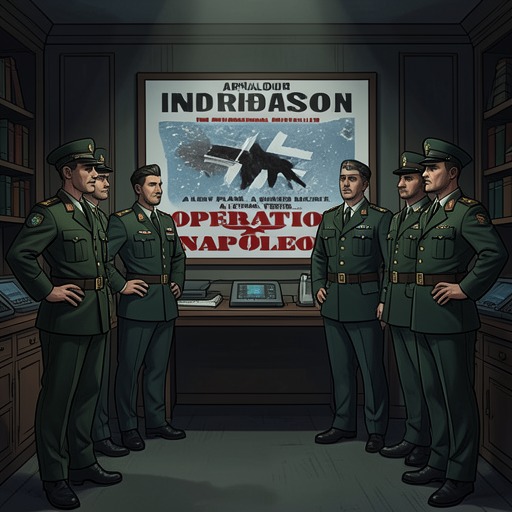
The expedition reaches Höfn after a difficult overland journey: twelve military vehicles carry two hundred soldiers, who have had to circle much of the country because the airstrip at Hornafjörður is closed for winter and the unbridged rivers of the Skeidará sands cut off the direct route west. The force belongs to the 10th Infantry Regiment and 46th Field Artillery Battalion, under General Charles H. Bonesteel. Colonel Miller leads the search itself. His troops camp outside Höfn in former British occupation barracks before moving toward the glacier.
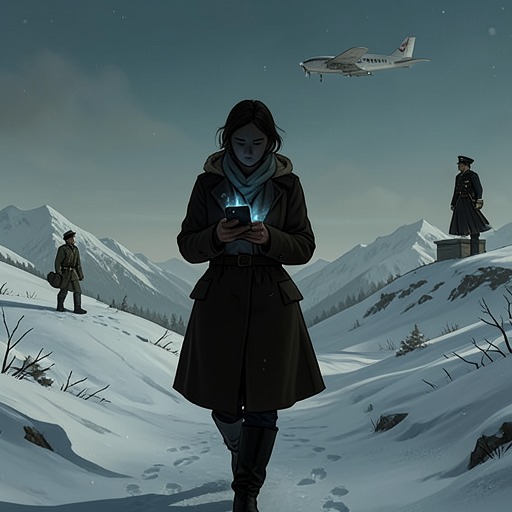
By the time they reach the brothers’ farm, almost ten days have passed since the men heard the plane, and snow has fallen without respite. The brothers agree to guide the soldiers over the ice cap. They speak no English, so they use gestures and signs to indicate where the aircraft might have gone down and to warn that a winter search is unlikely to succeed. They explain that the glacier is immense, and that snow may already have erased the traces of a crash. Colonel Miller understands their warning but presses on.
Command on the Glacier
Miller keeps his men in order, but the brothers soon discover that most of the soldiers have little experience of glaciers or winter expeditions. They lead them safely past crevasses and gullies to a camp in a depression at the glacier’s edge, about 1,100 metres above sea level. The short daylight window—roughly from eleven in the morning until half past five—leaves little time for searching.
For three weeks, Miller’s troops comb the glacier’s slopes and five square kilometres of the ice cap. The search is divided between a group working the foothills from a camp near the farm and another camping on the ice. At dusk, the soldiers return to the farm base, where they eat, sleep, and sing songs the brothers recognize from the radio. Their equipment gives the expedition its own stark material detail: double-layered silk mountaineering tents, primuses and oil lamps, long leather coats with fur-lined hoods, and thick Icelandic-wool gloves.
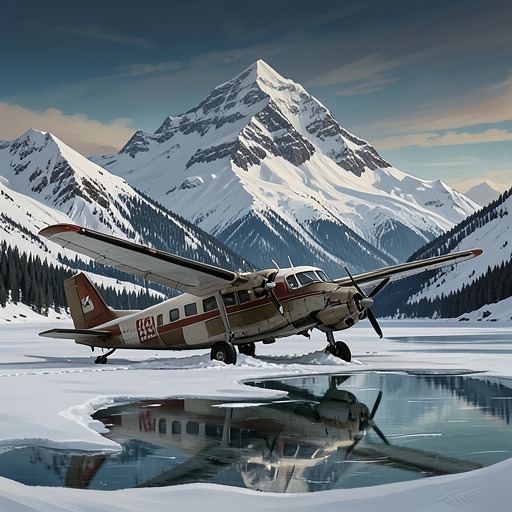
The brothers find the only trace of the aircraft recovered on this first expedition: the rim of its nose wheel, about two kilometres onto the ice cap. Miller takes charge of it immediately. Beyond that fragment, the surface is smooth and offers no visible sign of a forced landing. The brothers suggest that drifting snow may have covered the wreckage. Their image of the glacier swallowing the plane becomes literal evidence of how little the search can establish: a piece of landing gear survives, but the aircraft itself remains hidden.
The Brothers and the Man Behind the Command
Miller searches with an intensity that astonishes the brothers. He seems tireless and earns their admiration; they grow fond of him and willingly do what they can to help. He, in turn, relies on their local knowledge, and the relationship becomes friendly despite the language barrier. Decades later, he remembers them as hospitable, cooperative, and—above all—discreet. They had guided him without interrogating him about the mission, a quality that clearly mattered to him long after the expedition ended.
One episode unsettles the brothers’ picture of their forceful young commander. They find Miller alone in the stable, stroking a horse’s head and weeping. His shoulders shake as he cradles the animal; when he notices them, he wipes his face and quickly acts as though nothing has happened. He tells them the horse is handsome, but they do not understand his words and can only guess that he is homesick. They had estimated that he was no more than twenty-five. The scene does not explain his grief, but it leaves them with an image at odds with his public authority: a young officer briefly unable to conceal his feeling.
The nose-wheel rim carries another unresolved detail. Before Miller confiscates it, the brothers see lettering on it in a language they understand even less than English. They continue to wonder about the inscription. The search therefore leaves them not only with the mystery of the buried aircraft, but with a small, tangible clue whose meaning lies beyond their knowledge.
The Search Abandoned, the Secret Revived
Two severe storms hamper the expedition, and the second buries tents and other equipment so completely that they are lost. Miller is eventually forced to abandon the search without finding the plane. His persistence does not overcome the weather or the glacier’s cover; the expedition ends with the wreck still missing and the brothers’ warning about the snow unconfirmed but plausible.
The narrative later returns to Miller as an old man near Washington, D.C. When Vytautas Carr visits on Friday, 29 January, Miller is around eighty, stooped, with sparse white hair and a face marked by liver spots. He shuffles in worn felt slippers through a neat two-storey wooden house and receives home help three times a week, as well as delivered meals. His wife died twenty years earlier, and they had no children. These details suggest a life narrowed by age and loss, but the apparent frailty is misleading: his mind remains lively and resourceful.
Carr’s visit reconnects Miller to the aircraft. Carr has been told that a clear image of the country’s largest glacier shows an object returning after many years, and that he must direct a covert operation from Keflavík. The orders call for two special-forces squadrons, with the mission presented as a routine exercise; Carr is also to manage Icelandic objections through the Defense Secretary, while Immanuel Wesson takes over the embassy in Reykjavík as spokesman. Carr calls Miller after the plane turns up, fulfilling an old promise and making the former expedition leader part of the renewed effort.
Memory, Trust, and the Larger Operation
In Miller’s study, photographs of military service—among them images of comrades from World War II and scenes from Korea and Vietnam—share the walls with books, mostly about war. The room gives material form to a long career, while his clear attention to the plane shows that the past is not merely displayed there: it remains active. He asks whether Carr is certain it is the same aircraft and whether Ratoff has been told what it contains. His questions make clear that recovery is not simply a matter of locating and transporting wreckage.
Carr explains that trucks are waiting to move the dismantled plane to Keflavík and that the bodies will travel with it. He has instructed Ratoff about any papers found among the wreckage, though he accepts the risk that Ratoff may read them. Carr expects the episode to be closed within days and says that they will finally be able to breathe easier; when Miller asks about Ratoff, Carr says their options remain open. The exchange places Miller close to the operation’s concealed stakes without making him its field commander in the present. His old search, the brothers’ discretion, and the recovered documents now converge in a plan whose handling of both bodies and papers is tightly controlled.
Miller’s significance rests on this bridge between two searches separated by decades. In 1945 he is the determined officer who trusts local guides, takes custody of the lone wheel fragment, and leaves the glacier without the aircraft. In old age he remains a trusted contact for Carr, capable of asking the questions that expose what the recovery operation entails. The contrast between his disciplined authority and the tears witnessed in the stable, and between the plane’s disappearance and its eventual return, keeps the mystery attached to a human memory rather than to the wreck alone.